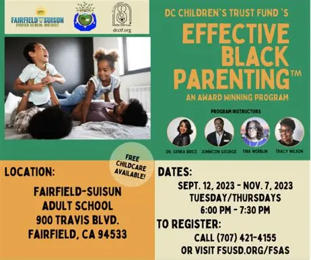
Our agency in Oklahoma had a Black parenting program (Effective Black Parenting), consisting of culturally specific strategies and best practices for raising Black children on the basis of African American history and culture which included but was not limited to, the experience of slavery in the 17th and 18th century. The program was conducted out of our northside center in Tulsa where most African American communities were situated, but the program had been discontinued for some reason I later came to understand.
My boss, Rhonda was White and she spoke quite openly of the problems the agency was having with its programs at the northside center, and how racial hostility still mattered. The lady who was teaching the Black Parenting program had quit abruptly for personal reasons, and Rhonda had difficulties finding someone to replace her. In the meantime, she, Rhonda took over the classes, but attendance petered out and the program was regrettably terminated. It was my turn now, not to teach the classes but to find out what was going on and to see if fences could be mended. And I realized that they could.
I was welcomed heartily by the African American staff at the center, no hostility at all there. I quickly became aware that I too was a colored person and that it mattered. I told them that my mission was to restart the Black Parenting program since it had been successful in the past and what did they think about that? Everyone agreed and we immediately set out reviewing applicants for the position. I eventually hired the right candidate and the program took off with much community support. I made fast friends among both staff and parents.
An estimated 7.8% of Oklahomans are Black as of the 2020 census, constituting 289,961 individuals. Inequalities continue to persist in the 21st century, with Black children in Oklahoma estimated in 2019 to be almost six times more likely to live in concentrated poverty than white peers. This fact alone underscores the stark differences between conditions in which White children are raised compared to Black children. This is an exceedingly complex social dynamic that is nowhere close to being resolved. For example: Currently, Black Oklahomans make up 8% of the state population but 27% of the current prison population. Black Oklahomans are imprisoned at a rate of 19.83 per 1,000 residents, more than 4 times the white imprisonment rate in Oklahoma (4.1 per 1,000 residents) and Oklahoma has one of the highest rates of Black imprisonment in the US. (Wikipedia)
HEART-MIND HARMONY
Emotional Wellness for Women